Arrant Pedantry

By

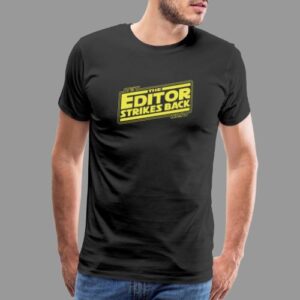
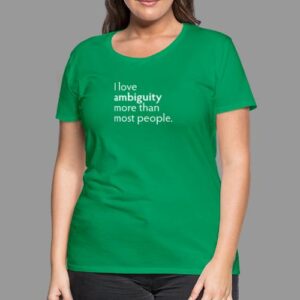
25 Percent Off at the Arrant Pedantry Store

Today’s the biggest sale of the year at the Arrant Pedantry Store, with 25 percent off all orders. There’s no coupon code required—just click the “Redeem” button below the navigation bar. And don’t forget that you can customize colors and even put the designs on other products. The sale only lasts today, so check it out!

Update: The 25 percent off sale is over, but you can still get 15 percent off through December 1st. This is the last sale before Christmas, so act fast!

By

I Am Begging You to Learn How Dictionaries Work

It’s a phenomenon as predictable as the tides: a dictionary adds new words or definitions, and then people grouse about those changes, either because they don’t like the new words and think that the dictionary is declaring them acceptable, or because they personally have never heard of those words before and therefore don’t see why they should be included. They often blend in grumpiness about the language supposedly declining or about kids these days. In both cases, of course, the real problem is that readers just don’t understand how dictionaries work.

Take this recent example from Maura Hohman at NBCLX, a site dedicated to “thought-provoking content” “about tech, the environment, politics, community, social issues, and current events.” It takes the familiar kids-these-days trope and gives it an unusual spin: the author is only thirty, but she feels old because she doesn’t recognize a few of the 455 words recently added to Merriam-Webster’s online dictionary. She starts off by calling herself an elder millennial, which I found cute as a millennial who just turned forty. I also found it odd from someone complaining about definitions. Definitions vary, of course, but elder or geriatric millennials are generally considered to have been born somewhere between something like 1980 and 1985 or 1981 and 1988. Even by the more generous definition, Hohman misses the cutoff by three years. Nevertheless, she says it was “a gut punch” to realize that she didn’t know a lot of these new words, which she calls “wrinkle-inducing additions.”

The first word she complains about, zero-day, means “of, relating to, or being a vulnerability (as in a computer or computer system) that is discovered and exploited (as by cybercriminals) before it is known to or addressed by the maker or vendor”. Weirdly, though, the definition she gives appears to be for a noun, not the adjective that Merriam-Webster enters. At any rate, Hohman imagines that this is a term used by children and that her unfamiliarity with it makes her old, when really it just means she doesn’t read much about device security. And that’s fine! But if she ever reads an article that mentions a zero-day vulnerability, now she’ll be able to look up that phrase in Merriam-Webster.

The next term, blank check company, was one that I don’t think I’d encountered before either. It’s defined as “a corporate shell set up by investors for the sole purpose of raising money through an initial public offering to acquire another business yet to be determined”. But rather than taking my unfamiliarity with the term as a sign that I’m old and out of touch, I took it as an opportunity to learn a new word. I’m still not totally sure I understand it, but it’s also not a term that’s really relevant to my interests. Again, that’s fine—but now it’s in the dictionary for anyone who might want to know what it means.

Deplatform is next on the list, and I’m honestly surprised that a journalist working in the year 2021 had never encountered this term before. It’s been everywhere for the last few years, and for what it’s worth, Merriam-Webster says the first known use was in 1998 (much older than I would have guessed), back when Hohman was probably in third grade. But Google Trends shows that there’s been a lot of interest in the term in the last few years, so it seems like it’s certainly worth including in the dictionary.

When she gets to oobleck (“a mixture of corn starch and water that behaves like a liquid when at rest and like a solid when pressure is applied”), Hohman says, “At this point, I knew Merriam-Webster was mocking everyone born before 2000.” Did she never make that corn-starch-and-water mix in elementary school? I certainly remember making it, probably before Hohman was born. I can’t remember now if we called it oobleck at the time, though I’m certainly familiar with the term, which is even older than I am—Merriam-Webster dates it in this use to 1973, putting it in the middle of Gen X rather than Gen Z. If anything, the question here isn’t why it’s in the dictionary but why it took so long to be included.

Last on the list is teraflop, which Hohman says is “a unit of measure for the calculating speed of a computer equal to one trillion.” But this definition doesn’t even make sense. A unit equal to a trillion is a trillion. It looks like she copied and pasted only the first line of the definition and missed an important part: it’s a unit “equal to one trillion floating-point operations per second.” It’s a rather technical term, so if you’re not a computer geek, I can see why you might be unfamiliar with it. But it seems strange for her to say that she’s never thought about the calculating speed of a computer. Aren’t we supposed to be the generation that grew up with computers? And, again, this term isn’t new—The Oxford English Dictionary dates it to 1984. (By comparison, gigaflop and megaflop are dated to 1976.)

Of course, the real problem with all of these complaints has nothing to do with Hohman’s age or even the fact that she wasn’t familiar with some of the new words in Merriam-Webster’s dictionary; it’s that she seems to think that if she doesn’t know all of these newly entered words, then the dictionary isn’t for her anymore. But that’s silly. A dictionary that contained only the words you already know wouldn’t be a very useful dictionary, would it?

When I was a kid, I’d often come across an unfamiliar word and ask my parents what it meant. Their answer was almost always the same: “Look it up.” So I’d pull out the big two-volume World Book Dictionary that came with our encyclopedia set, and I’d look it up. I learned a lot of words doing that. There will always be words that you’re not familiar with, either because they’re not from your generation or from your region, because they’re technical or obscure, or because you simply haven’t run across them before, which means that there will always be opportunities to learn something new in a dictionary. Because that’s the real job of a dictionary—not to wrinkle your face but to wrinkle your brain.

By

A Sale and a Speaking Event

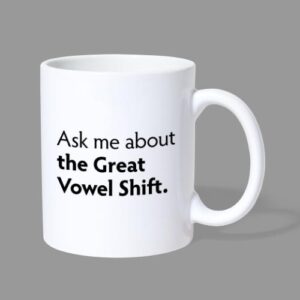
Today through May 28, you can get 20 percent off everything at the Arrant Pedantry Store—just click the “Redeem” button on the blue bar near the top. Check out old favorites like Stet Wars and Battlestar Grammatica or newer items like Hwæt and Ask Me About the Great Vowel Shift (fair warning: people will actually ask you about the Great Vowel Shift if you wear this, so be prepared).

And don’t forget that you can customize colors and even put the designs on different products like phone cases, tote bags, and hats.


On a completely different note, I’ll be speaking next week at the biennial conference of the Dictionary Society of North America on the feedback loop between copy editors and dictionary editors, using towards and toward as a case study. You’ll also get to listen to talks about things like how Merriam-Webster got “COVID-19” into the dictionary in record time and how courts use dictionaries, along with a debate between Kory Stamper and Bryan Garner about whether dictionaries can be or should be authorities.

The conference will be held virtually on June 4 from 10:00 a.m. to 3:30 p.m. Eastern time, and you can register here. I hope to see you there!

By

What I Learned from Teaching Editing

Last semester I finally had the opportunity to do something I’d thought about for many years: teach a college class. I’d applied for a full-time teaching professor job before, but I’d been passed over in favor of someone with more experience. I’d also been approached about adjuncting before, but I passed up the opportunity because I was worried about how I’d manage teaching on top of a full-time job. But when I was approached again last summer about teaching a class in the fall, I decided to go for it.

It was a 400-level class in the editing and publishing major and the editing minor called genre and substantive editing. My particular section would focus on book publishing. I was given a syllabus but not much in the way of other materials like presentations, handouts, or in-class exercises, so I had to come up with a lot of things as the class progressed. It was a good opportunity to learn about what goes into putting a class together, but it was also a good chance to learn some things about editing from a new perspective.

Learning Editing Requires a Lot of Hands-On Exercises

Standing in front of a bunch of students and talking at them for an hour or so isn’t exactly the best teaching method, but it’s especially unhelpful when teaching a practical skill like editing. It’s important for the students to understand concepts, but they learn a lot more if you give them some hands-on work and then give them constructive feedback on their work.

Good instruction in editing means presenting students with real-world editing problems and then letting them work out solutions. And since most editing problems have multiple possible solutions, the students can present different perspectives and build on each other’s ideas.

Unfortunately, being a newbie instructor, I spent far too much of my time standing up and talking. That meant that not only were my students not getting as much hands-on practice as they should have, but I was spending too much of my time preparing lectures when I could have just been leading discussions. If I teach again, I’ll have to dedicate more time to working on real-world exercises in class.

But most of the assignments for the course involved real editing tasks, from writing a cover letter and estimate for a freelance job to doing substantive and developmental editing on some book manuscripts. I think the students all got a lot out of doing real work and getting feedback on it.

Expertise in One Area Doesn’t Always Translate to Another

This is an obvious point, and it’s one I’ve learned the hard way at a few different points in my career. But it was still instructive to see that it’s as true for others as it is for me.

The three largest assignments in the class were a substantive edit of three chapters of a textbook on technical editing, a brief index for those three chapters, and a developmental edit letter of a young adult novel. Some students did great at one or two, but few excelled at all of them.

And the fiction section was a challenge for me—all of my book editing experience is in nonfiction. A fair portion of the syllabus was dedicated to general editing principles like how to query or how to edit for inclusive language, but several days on the syllabus were dedicated to fiction editing, followed by the developmental edit letter assignment.

I might have been able to muddle my way through, but thankfully my wife Ruth, who has edited multiple novels and has written three book manuscripts of her own, stepped in to teach three class periods and then help me grade the final project. I greatly appreciated her expertise and her willingness to share it with me and my students. I feel like I learned quite a lot too. (You can read about her experience helping me grade papers on her blog.)

If I’d had more time to plan, I might have tried to invite more guest lecturers to come and share their knowledge in areas where I don’t have any experience or have a little but am not an expert.

Indexing Can’t Be Taught in a Day

If you’ve ever done any indexing, you’re probably laughing right now. Very few things can actually be taught in a day, and indexing is a highly specialized skill that you could easily spend a whole course on. There’s no way to make someone a competent indexer with only a day’s instruction.

Unfortunately, the program at my university doesn’t have a course on indexing, and there were enough other topics to cover in this course that there was only one day left for indexing, leaving only enough time for the crashiest of crash courses. I think the idea was to give the students just a taste of indexing so that they know whether it’s something they want to pursue further on their own. At the very least, they’d have a brief introduction to the topic in case they were ever asked to create an index in the future.

Unfortunately, I made my lecture for that day too conceptual and didn’t provide enough practical examples. I’m also not a real indexer, though I have written a few indexes and have edited many more—including some very bad ones in need of extensive work—so at least I was able give the students some basic pointers. I did include a few short passages and walked the students through the process of identifying topics for indexing, but I wish I’d included some longer sections of text and had spent the bulk of my time going over it with them.

There’s No Substitute for Professional Experience

Even though I lack expertise in some areas, I have a lot of experience in others, and I was able to draw on that experience a lot throughout the class. As I said before, hands-on work is already invaluable in a field like editing, but I think the students really appreciated being able to hear about how I handled real-life problems at work: plagiarists, authors who are resistant to editing, clients with unreasonable expectations, and so on.

And not only was I able to share how I had solved problems, but I was also able to tell my students about times when I felt like I’d failed in some way, like when I underbid on a freelance project and then spent far too many hours trying to please an impossible client, or when I was out of my depth on an enormous project with impossible deadlines, or when I caught instances of plagiarism but the project manager quietly fixed the problem rather than letting the author suffer the consequences.

Telling them about my own challenges or failures at work taught them, I hope, not only how to face those problems themselves but also that it’s okay to fail sometimes. (I’m sure they’ll still learn a lot of these lessons themselves the hard way, just as we all do.)

And this class became yet another one of those experiences for me. I think I did well overall, but there were some things I definitely could have done better. Almost as soon as the semester had started, I was already thinking of ways to improve my teaching. Hopefully I’ll get the chance to put those ideas into practice someday.